
The Manor House in Ojsławice
The family home of the line descended from Marcin Edmund, author of *My Memoirs of 1863*
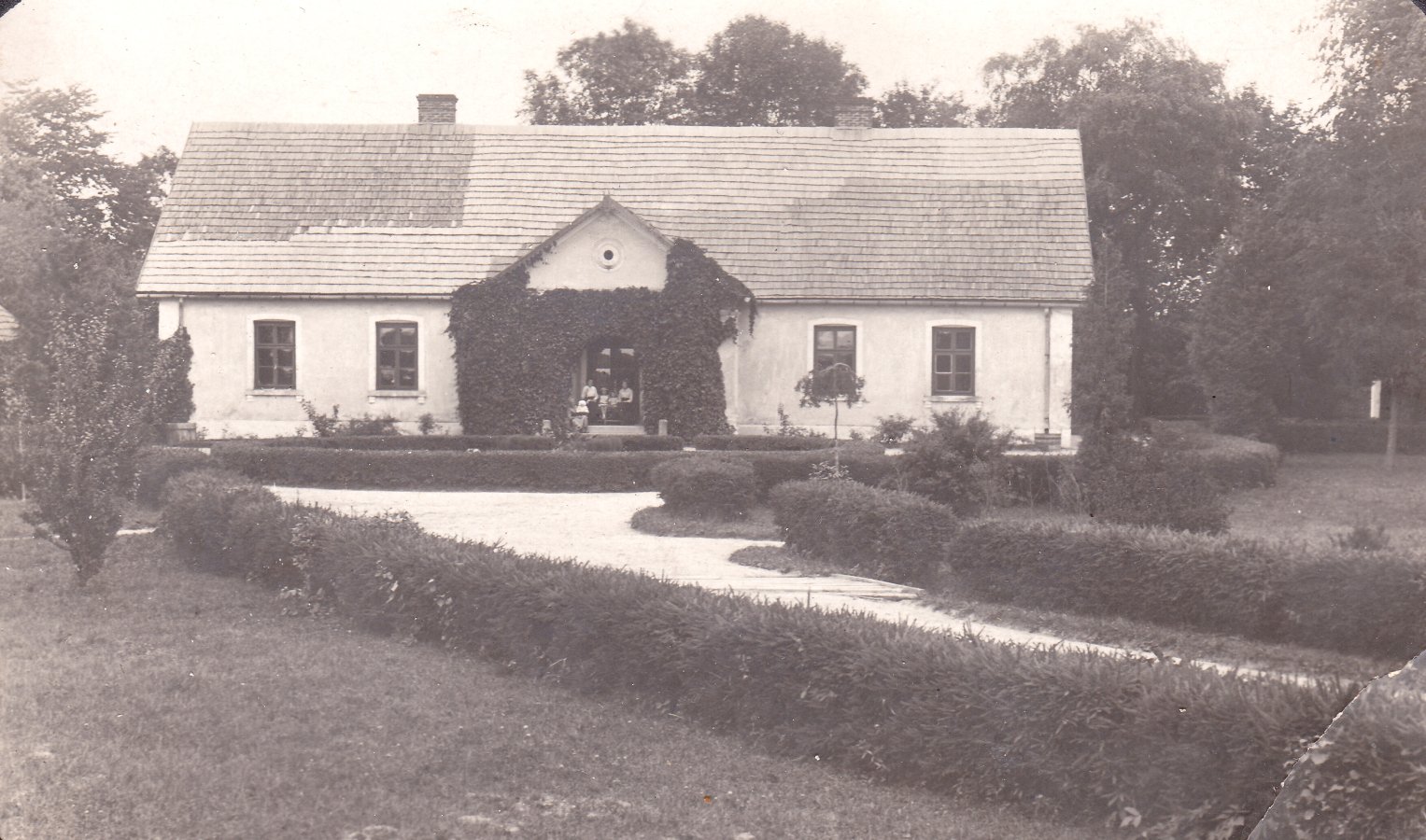
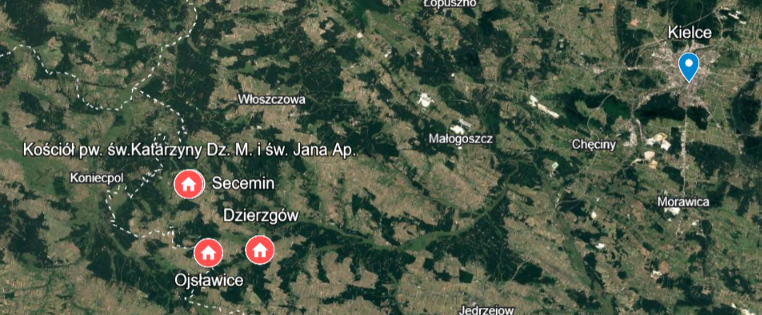
A chapter from the book ‘The Wierusz-Kowalskis: Selected Figures’ entitled ‘Ojsławice – Family Seat of the Line of Edmund Wierusz-Kowalski, author of *Wspomnieniamoje* from 1863’, by Rafał Wierusz-Kowalski
Ojsławice, situated in the Świętokrzyskie region, remained for decades one of the places most closely associated with the history of the Wierusz-Kowalski family. The local estate was not merely a country estate. The manor house was the centre of life for successive generations of the family – a place of birth, gatherings and daily work – whilst the surrounding park and farm buildings formed a space whose traces can be found in the family archives and preserved photographs.¹
The history of Ojsławice is linked above all to Marcin Edmund Wierusz-Kowalski, born on 11 November 1839. In his youth, his life was shaped by the January Uprising. He fought, amongst others, in the units commanded by Bończa Tomaszewski, Zygmunt Chmieleński and Napoleon Krzywda-Rzewuski. After being taken prisoner by the Russians, he was exiled deep into the empire. Five years later, he returned to Poland, married Leokadia née Kozłowska, and spent the rest of his life on his family’s estate in Ojsławice.²
It was here, now a mature man, a landowner and a family man, that he reflected on the events of his youth. In 1903, in Ojsławice, he wrote down *My Memoirs from 1863*. Thanks to this, the manor house became not only the family’s home, but also the place where an important account of the January Uprising was written.³
The Manor House and Park
The entire former manor complex, as known to the Wierusz-Kowalski family, has not survived to the present day. However, the photographs in the family archive provide a unique record of its appearance. One of them shows the manor house during the First World War. Others offer a glimpse inside – photographs of parts of the drawing room have survived, allowing us to reconstruct at least some of the atmosphere of the family home.¹
The manor house did not exist in isolation from its surroundings. An important element of the estate was the park. Its origins date back to the second half of the 18th century, whilst it was redesigned towards the end of the 19th century. The manor park in Ojsławice was later placed under conservation protection.⁴ The old trees visible in the surviving photographs – including a distinctive fir tree – serve as a reminder that the space surrounding the house was an integral part of its inhabitants’ lives.
The surviving family photographs allow us to see Ojsławice not as a static monument, but as a living estate. The photographs feature the manor’s residents, relatives, staff, animals and sections of the farm buildings. The family archive contains, amongst other things, photographs of horses, a tame roe deer, the dog Hagar, as well as documentation relating to the running of the farm, including a cattle valuation.¹
An important feature of the Ojsławice landscape was also the wayside shrine standing at the crossroads. A surviving photograph documents its appearance, whilst the current register of historic monuments lists a brick chapel from the early 20th century in Ojsławice.⁵ It is one of the few physical remnants of the village’s former landscape.
Ojsławice in the interwar period
Following the death of Edmund Wierusz-Kowalski in 1913, the history of the estate was carried on by the next generation. His son, Ignacy Wierusz-Kowalski, who was born here in 1878, was closely associated with Ojsławice. The inscription on his gravestone in Dzierzgów later referred to him as the owner of the Ojsławice estate.⁶
Family photographs from the interwar period show the manor as a place still full of life. The photographs from 1936 are particularly interesting – one taken after a ball, another showing a car in front of the manor.¹ These are seemingly ordinary images, but with the benefit of hindsight they take on exceptional value. They depict the final years of the Polish landed gentry before the catastrophe of the Second World War.
Ojsławice was also a meeting place for the extended family. The archive contains photographs of Karolina Wierusz-Kowalska, Maria Grużewska and members of the Grużewski and Ruszczyński families, as well as other individuals connected to the descendants of Edmund and Leokadia.¹ The manor house was therefore more than just the property of a single individual. It remained a point of reference for a wide circle of relatives.
The War – The Final Years of the Old World
The photographs taken during the German occupation form a particularly moving part of the family archive. Amongst others, a photograph of Jerzy Grużewski taken in Ojsławice in October 1940 has survived, as well as photographs from 1942 and a photograph of Maria Grużewska and Roman Bysiewski from the period of the occupation. In one of the shots from 1942, a section of the estate’s buildings – the garage – can also be seen behind Jerzy Grużewski.¹
These photographs are of exceptional documentary value. They depict people who, despite the war, continued to go about their lives within the confines of their family home. The landscape appeared to remain the same: the manor house, the park, the farm buildings and the roads of Ojsławice. Yet the world of which they had been a part for generations was drawing to a close.
One of the last photographs of this era, taken in Ojsławice in 1944, shows Tadeusz and Józef Wierusz-Kowalski, along with Maria and Elżbieta.¹ The photograph was taken as the war was entering its final phase. Soon afterwards, the post-war political changes and the agrarian reform brought the era of landed estates in Poland to a definitive end.
The manor house ceased to fulfil its former function, but Ojsławice remained in the family’s memory. Thanks to the surviving photographs, it is possible today to reconstruct not only the appearance of the building, but also a glimpse of the everyday lives of its inhabitants.
Dzierzgów – the family burial ground
The history of Ojsławice finds a special culmination in nearby Dzierzgów. It is there, in the parish cemetery, that a group of graves belonging to the Wierusz-Kowalski family – the owners and residents of Ojsławice – can be found. The cemetery belongs to the parish of the Assumption of the Blessed Virgin Mary in Dzierzgów, and its origins date back to around the mid-18th century.⁷
The cemetery is of considerable historical value. It still features a cemetery chapel and old gravestones belonging to families associated with the surrounding estates. A document from 1824 sets out plans to enclose the cemetery with a ditch and an embankment, which indicates that it dates back much further.⁷
Of greatest importance to the history of the Wierusz-Kowalski family is the group of family graves located here.
Marcin Edmund Wierusz-Kowalski, the heir to Ojsławice, a participant in the January Uprising and the author of memoirs written in 1903 at the family manor, is buried here. He died on 10 April 1913. His gravestone bears the inscription ‘heir to Ojsławice’.⁸
Buried beside him is his wife, Leokadia Wierusz-Kowalska (née Kozłowska), who died on 5 June 1933. Her gravestone also makes direct reference to the family estate – she is described on it as the heiress of Ojsławice.⁹
The cemetery also contains the grave of their son, Ignacy Wierusz-Kowalski, who was born in Ojsławice in 1878 and died on 3 August 1937. The inscription on his gravestone refers to him as the owner of the Ojsławice estate. Buried in the same place is Karolina Wierusz-Kowalska, daughter of Edmund and Leokadia, born in Ojsławice in 1884 and died in 1966.⁶
Particularly poignant is the shared gravestone of Leokadia and the young Zochna Wierusz-Kowalska, daughter of Ignacy and Zofia (née Linowska).⁹ Her untimely death serves as a reminder that the family cemetery preserves not only the history of the estate’s owners, but also the personal tragedies of successive generations.
Ojsławice in the interwar period
Following the death of Edmund Wierusz-Kowalski in 1913, the estate’s history was carried on by the next generation. His son, Ignacy Wierusz-Kowalski, who was born here in 1878, was closely associated with Ojsławice. The inscription on his gravestone in Dzierzgów later included the title ‘owner of the Ojsławice estate’.⁶
Family photographs from the interwar period show the manor as a place still teeming with life. The photographs from 1936 are particularly interesting – one taken after a ball, another showing a car in front of the manor.¹ These are seemingly ordinary images, but with the benefit of hindsight they take on exceptional value. They depict the final years of the Polish landed gentry before the catastrophe of the Second World War.
Ojsławice was also a meeting place for the extended family. The archive contains photographs of Karolina Wierusz-Kowalska, Maria Grużewska and members of the Grużewski and Ruszczyński families, as well as other people connected to the descendants of Edmund and Leokadia.¹ The manor house was therefore more than just the property of a single individual. It remained a point of reference for a wide circle of relatives.
The War – The Final Years of the Old World
The photographs taken during the German occupation form a particularly moving part of the family archive. Amongst others, a photograph of Jerzy Grużewski taken in Ojsławice in October 1940 has survived, as well as photographs from 1942 and a photograph of Maria Grużewska and Roman Bysiewski from the period of the occupation. In one of the shots from 1942, a section of the estate’s buildings – the garage – can also be seen behind Jerzy Grużewski.¹
These photographs are of exceptional documentary value. They depict people who, despite the war, continued to go about their lives within the confines of their family home. The landscape appeared to remain the same: the manor house, the park, the farm buildings and the roads of Ojsławice. Yet the world of which they had been a part for generations was drawing to a close.
One of the last photographs of this era, taken in Ojsławice in 1944, shows Tadeusz and Józef Wierusz-Kowalski, along with Maria and Elżbieta.¹ The photograph was taken as the war was entering its final phase. Soon afterwards, the post-war political changes and the agrarian reform brought the era of landed estates in Poland to a definitive end.
The manor house ceased to fulfil its former function, but Ojsławice remained in the family’s memory. Thanks to the surviving photographs, it is possible today to reconstruct not only the appearance of the building, but also a glimpse of the everyday lives of its inhabitants.
Dzierzgów – the family burial ground
The history of Ojsławice finds a special culmination in nearby Dzierzgów. It is there, in the parish cemetery, that a group of graves belonging to the Wierusz-Kowalski family – the owners and residents of Ojsławice – can be found. The cemetery belongs to the parish of the Assumption of the Blessed Virgin Mary in Dzierzgów, and its origins date back to around the mid-18th century.⁷
The necropolis is of considerable historical value. It still features a cemetery chapel and old gravestones belonging to families associated with the surrounding estates. A document from 1824 outlines a plan to enclose the cemetery with a ditch and an embankment, which indicates that it dates back much further.⁷
Of greatest importance to the history of the Wierusz-Kowalski family is the group of family graves located here.
Marcin Edmund Wierusz-Kowalski, the heir to Ojsławice, a participant in the January Uprising and the author of memoirs written in 1903 at the family manor, is buried here. He died on 10 April 1913. His gravestone bears the inscription ‘heir to Ojsławice’.⁸
Buried beside him is his wife, Leokadia Wierusz-Kowalska (née Kozłowska), who died on 5 June 1933. Her gravestone also makes direct reference to the family estate – she is described on it as the heiress of Ojsławice.⁹
The cemetery also contains the grave of their son, Ignacy Wierusz-Kowalski, who was born in Ojsławice in 1878 and died on 3 August 1937. The inscription on his gravestone refers to him as the owner of the Ojsławice estate. Buried in the same place is Karolina Wierusz-Kowalska, daughter of Edmund and Leokadia, born in Ojsławice in 1884 and who died in 1966.⁶
Particularly poignant is the shared gravestone of Leokadia and the young Zochna Wierusz-Kowalska, daughter of Ignacy and Zofia (née Linowska).⁹ Her untimely death serves as a reminder that the family cemetery preserves not only the history of the estate’s owners, but also the personal tragedies of successive generations.
Ojsławice – a place of remembrance
The manor house in Ojsławice cannot today be viewed solely as a defunct or transformed landed estate. Its history has been preserved in several mutually complementary spaces: in the park and the remains of the former estate, in the chapel, in family photographs, documents and memoirs, and finally in the cemetery in Dzierzgów.
The special bond between Ojsławice and Dzierzgów is evident in the inscriptions on the gravestones. Edmund was the heir to Ojsławice, Leokadia the heiress to Ojsławice, Ignacy the owner of the Ojsławice estate, and Karolina was born in Ojsławice.⁶ ⁸ ⁹ The name of the family seat was thus literally set in stone.
Ojsławice was home to several generations of the Wierusz-Kowalski family. It was here that Edmund returned after the uprising and his exile. It was here that he started a family and ran his estate. It was here, in 1903, that he wrote his memoirs of his youth. It was here that subsequent generations grew up, family gatherings and balls were held, and photographs were taken of horses, dogs, cars and the manor’s residents. It was also here that war overtook the next generation of the family.
Dzierzgów, however, became their final resting place.
That is why the manor house in Ojsławice and the family graves in the cemetery in Dzierzgów should be regarded as two parts of the same story. The first tells of the family’s life; the second, of remembrance. Together, they form one of the most important sites associated with the history of this branch of the Wierusz-Kowalski family.
Acknowledgements
I would like to extend my special thanks to Anna Grużewska for sharing family photographs, documents and information concerning Edmund Wierusz-Kowalski, his family and the estate in Ojsławice. Thanks to the materials she provided, it has been possible to reconstruct the appearance of the manor house, its interiors, the daily lives of the estate’s inhabitants and the fortunes of successive generations of the family connected with Ojsławice.
I would also like to extend my special thanks to Adam Malicki, the author of the ‘Dawne Kieleckie’ website and an enthusiast of the history of the Kielce region, for documenting the region’s history, compiling materials on Dzierzgów, the local cemetery and the graves of the Wierusz-Kowalski family, as well as for compiling Edmund Wierusz-Kowalski’s book *My Memoirs from 1863*, which is one of the most important sources for understanding his life and his participation in the January Uprising.
Sources
- 1. The Wierusz-Kowalski family archive, a collection of photographs and documents relating to Ojsławice, including photographs of the manor house from the First World War, the interior of the drawing room, and family photographs from the 1930s and the period of the occupation.
- 2. Edmund Wierusz-Kowalski, My Memoirs of 1863; materials concerning the author and the Ojsławice estate.
- 3. Edmund Wierusz-Kowalski, My Memories of 1863, Ojsławice 1903.
- 4. Register of Monuments of the Świętokrzyskie Voivodeship – the manor park in Ojsławice, second half of the 18th century, redesigned at the end of the 19th century.
- 5. Local authority register of historic monuments – Ojsławice, a brick chapel from the early 20th century.
- 6. Parish cemetery in Dzierzgów – the gravestone of Ignacy Wierusz-Kowalski and Karolina Wierusz-Kowalska.
- 7. Materials relating to the parish cemetery in Dzierzgów; historical documentation of the cemetery and a plan for its layout dating from 1824.
- 8. Parish cemetery in Dzierzgów – the gravestone of Edmund Wierusz-Kowalski.
- 9. The parish cemetery in Dzierzgów – the gravestone of Leokadia (née Kozłowska) Wierusz-Kowalska and Zochna Wierusz-Kowalska.