
The Palace in Mikorzyn
A chapter from the book *Wierusz-Kowalskis: Selected Figures* – *The Wierusz-Kowalski Palace in Mikorzyn* by Rafał Wierusz-Kowalski
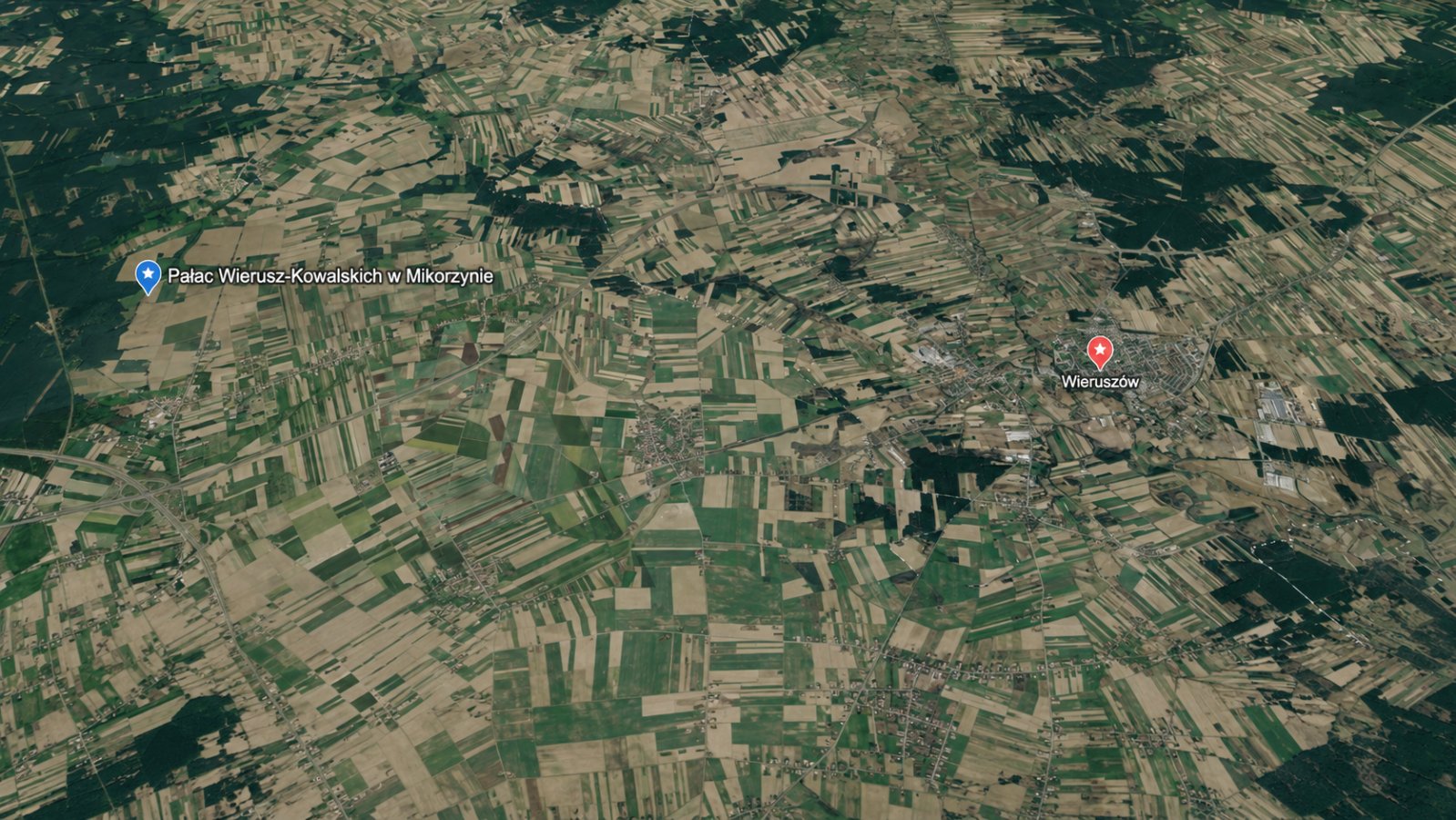
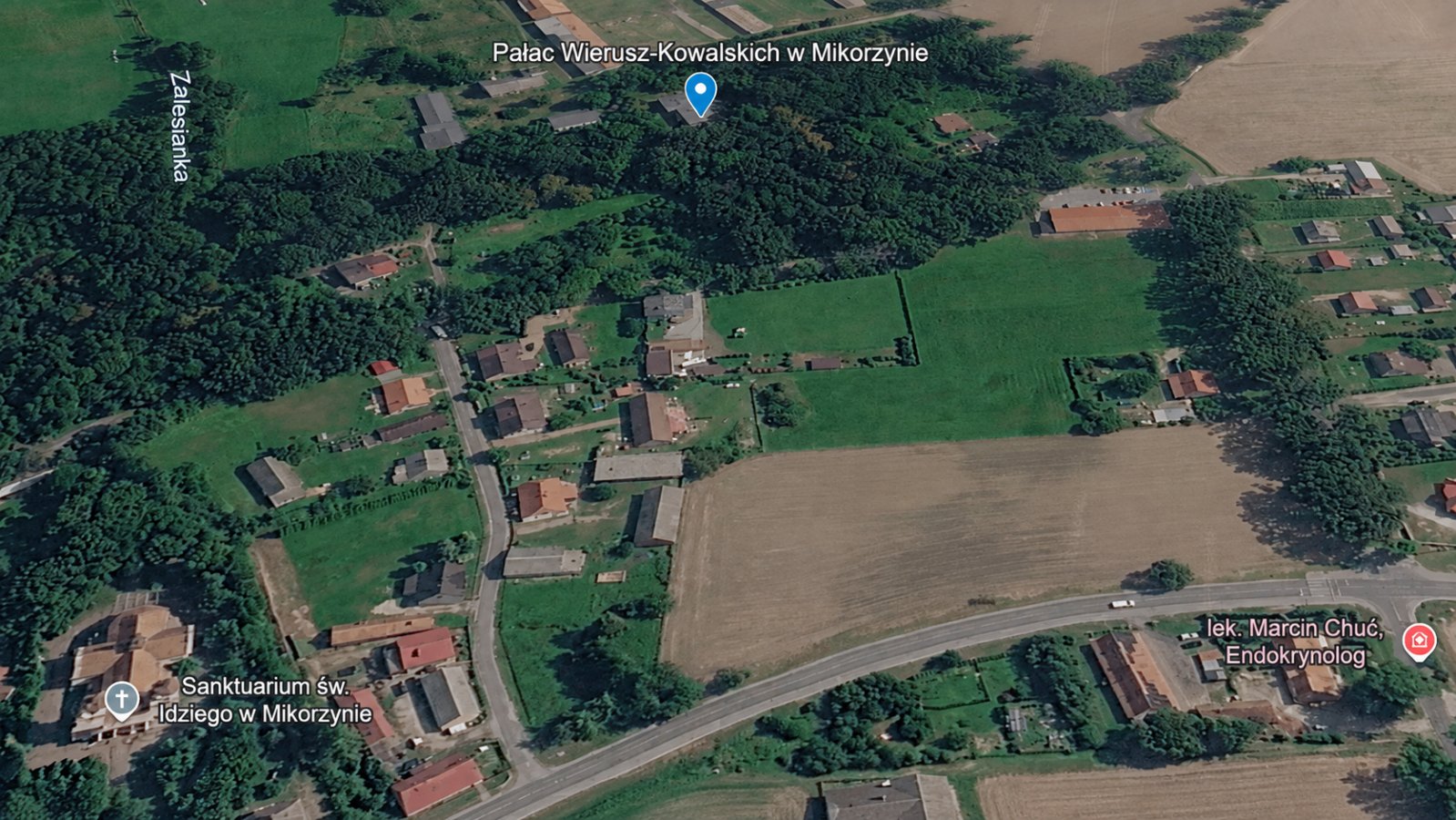
The palace in Mikorzyn is one of the most fascinating places associated with the history of the Wierusz-Kowalski family. Its history, however, began much earlier, before the estate came into the hands of Alfred Wierusz-Kowalski. In the 19th century, the residence was an important centre of landed, patriotic and cultural life, and during the January Uprising it provided shelter for wounded insurgents. Later, it became the Polish home of one of the most outstanding painters of the Munich School and a place with which successive generations of his family became closely associated.
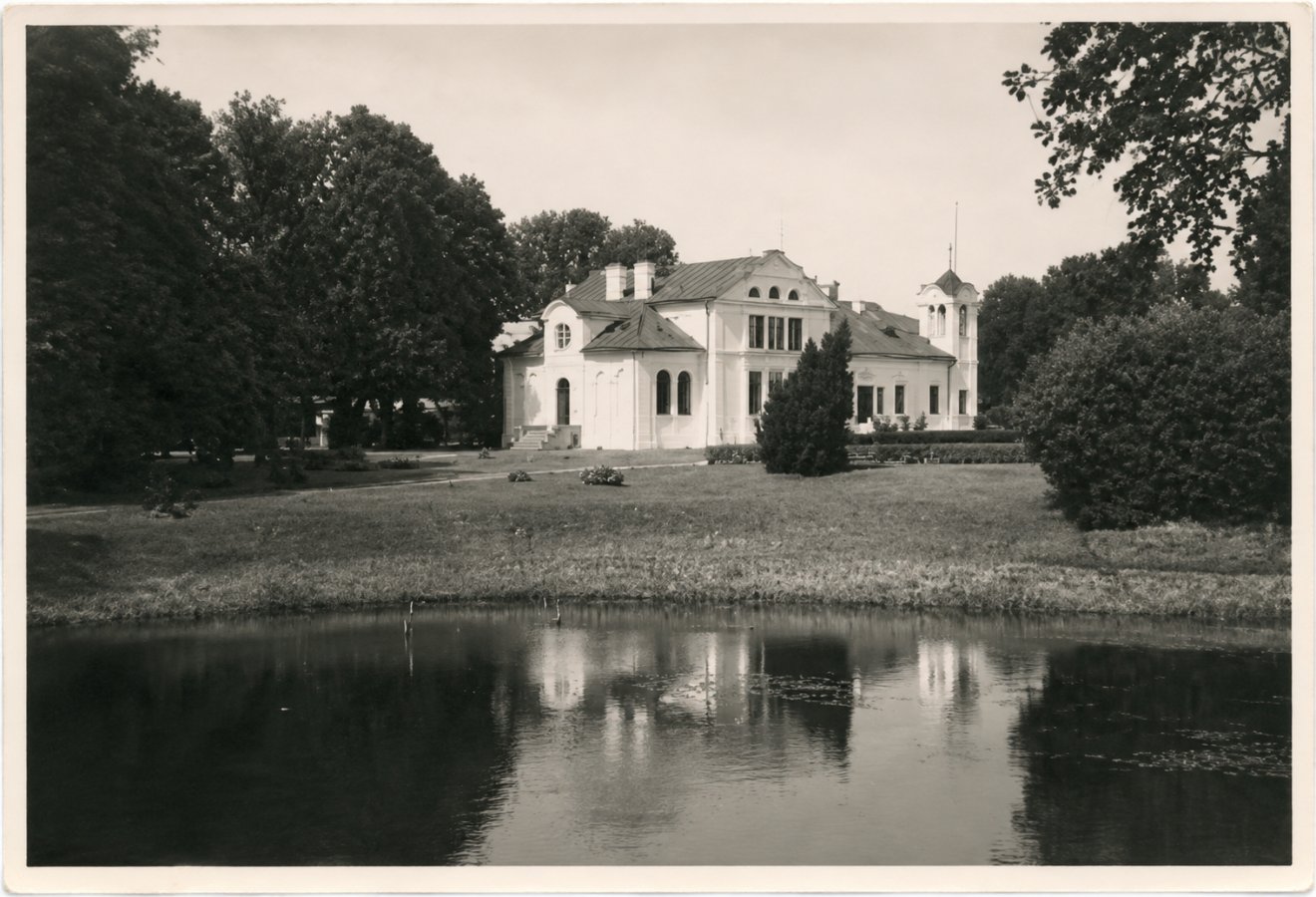
The palace in Mikorzyn – view from the ponds – the interwar period. Photo source: Tadeusz Nasierowski
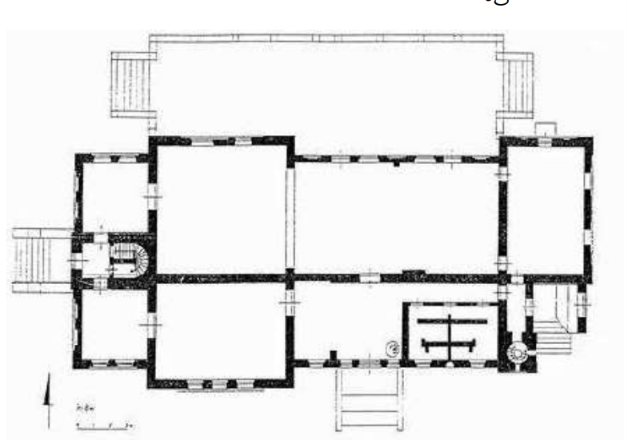
Ground floor plan of A. Wierusz-Kowalski’s residence in Mikorzyn. Source: Jacek Wojciechowski – ‘Like garlands of white roses. Studies on selected landed estates and their former owners in north-eastern Greater Poland’.
Mikorzyn was a former noble village in the Konin district and the parish of Ślesin. Its history is documented from the 15th century, and in the centuries that followed, the estate belonged to many landed families. In the 19th century, the estate passed into the hands of the Milewski family, then, in 1892, it was sold to Wacław Sikorski, and on 13 July 1896, Sikorski sold Mikorzyn to Alfred Wierusz-Kowalski for 43,000 silver roubles.¹
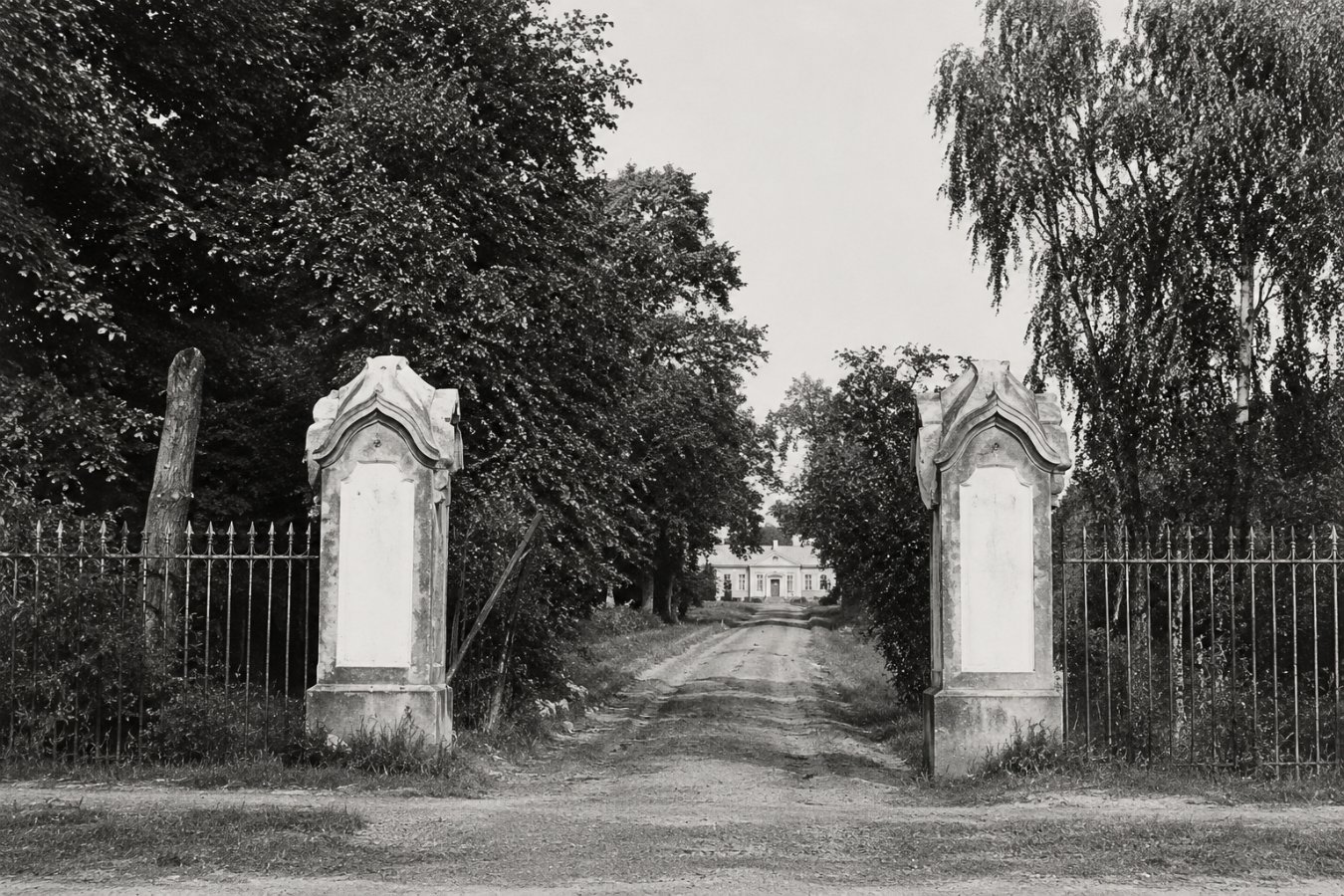
Entrance gate – interwar period. Photo source: Tadeusz Nasierowski
In the mid-19th century, Józef Milewski, a justice of the peace and community leader, became the owner of Mikorzyn. He took over an estate that was neglected and in debt, but through consistent hard work, thrift and the modernisation of the farm, he restored it to good condition. He expanded the farm buildings and also erected a new, spacious residence, the construction of which was entrusted to the Warsaw architect Julian Ankiewicz.²
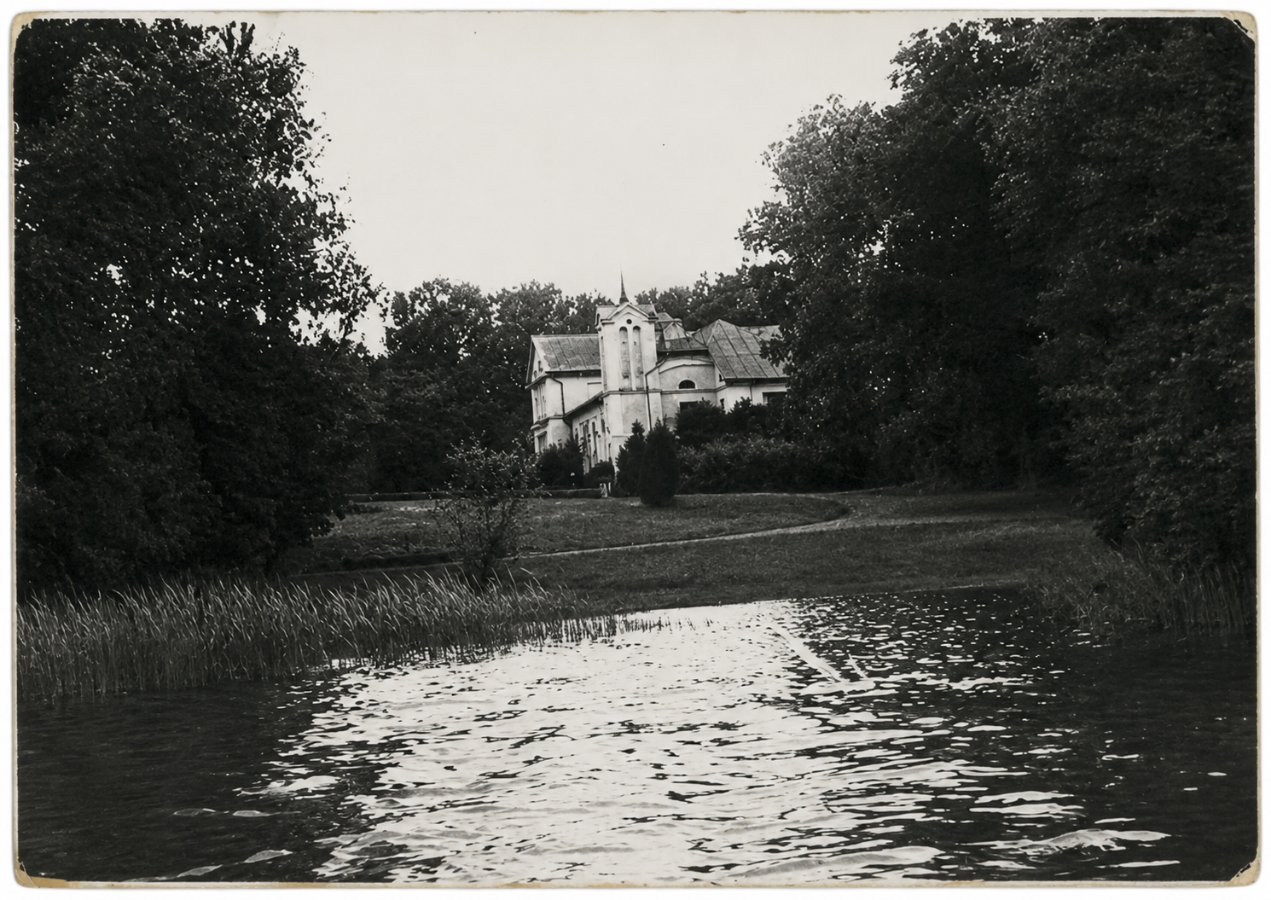
The palace in Mikorzyn – view from the ponds – the interwar period. Photo source: Tadeusz Nasierowski
Milewski turned Mikorzyn into one of the most important centres of social life in the area. Julian Wieniawski, known by the pseudonym Jordan, recalled that the Milewskis’ home was a gathering place for almost the entire neighbourhood. The host did not value ostentatious luxury; he preferred conversation, reading, music, dancing and other forms of socialising.³ The residence thus became not only the family’s home, but also a local centre of cultural life.
Józef Milewski was also involved in community work. He founded a nursery for rural children and a credit union, the aim of which was to reduce the residents’ dependence on moneylenders. A posthumous obituary from 1884 highlighted his exceptionally kind attitude towards the peasants, for which his opponents called him a ‘peasant-lover’.²
Józef’s eldest daughter, Aniela Milewska, was born on 25 March 1841. She grew up in a home with strong patriotic and cultural traditions, boasting an extensive library. She received a thorough education, and the atmosphere of her family home in Mikorzyn had a significant influence on her later literary interests.¹
In 1873, Aniela made her debut as a writer. Her works appeared, amongst others, in the Poznań-based *Dwutygodnik dla Kobiet* and in *Kaliszanin*. Jacek Wojciechowski points out that Aniela may have published some of her texts relating to folk culture under the pseudonym Janina Wiśniewska.¹ Aniela’s work drew on her experiences of family life, her interest in the lives of villagers, and the patriotic atmosphere in which she was brought up.
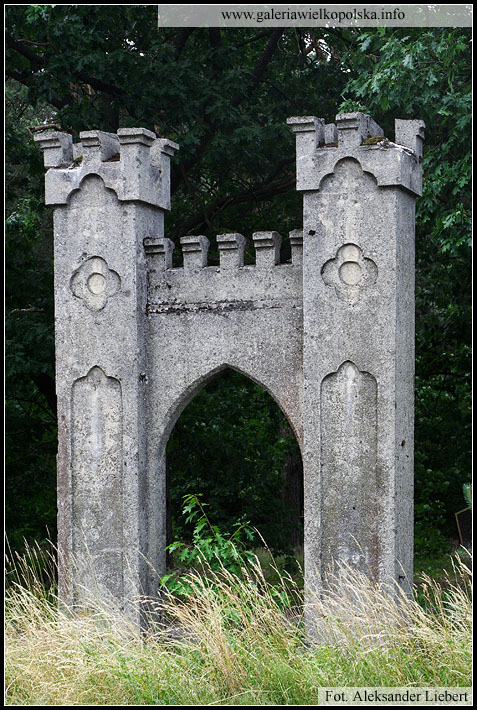
The park gate in Mikorzyn Photo source: Aleksander Liebert
The year 1863 marked a particularly dramatic chapter in the history of Mikorzyn. Insurgent units associated with Colonel Kazimierz Mielęcki were active in the nearby Kazimierz forests. Following the Battle of Olszak, the Milewski family opened their home to the wounded. The manor house was effectively turned into a field hospital, where a dozen or so, and sometimes more, insurgents were treated at any one time. Józef Milewski, together with his daughters, personally took part in caring for the wounded.²
This assistance required particular courage, as providing shelter to participants in the uprising exposed the family to severe reprisals from the Russian authorities and the army.
When a Russian detachment commanded by Prince Wittgenstein approached Mikorzyn, the situation became particularly dangerous. According to a surviving account, Józef Milewski went out to meet the commander and persuaded him not to harm the wounded or the estate’s owners. The order subsequently issued was intended to protect both the house and the insurgents staying there.²
Aniela Milewska helped to care for the wounded and later drew on her memories of these events in her play *Zygmunt*. The accounts of the insurgents, as recounted by Jacek Wojciechowski, describe the arrival of women, servants and doctors at the scene of the fighting, the treatment of the wounded and the organisation of their transport to a safe place.¹ Thanks to these accounts, Mikorzyn emerges not only as a country estate but also as a place of genuine commitment to helping those involved in the January Uprising.
In 1896, Alfred Wierusz-Kowalski purchased Mikorzyn from Wacław Sikorski. At the time of the purchase, he was nearly fifty years old and had been living in Munich for over two decades. The estate may have served to secure his family’s future, but it also held emotional significance. Its setting amongst lakes, forests and fields reminded the artist of the landscapes of the Suwałki region, with which his earliest memories were associated.⁴ Not far away, in Posada, lived his nephew Karol Wierusz-Kowalski, also a painter.
The present palace was not built by Alfred Wierusz-Kowalski. The residence had been built earlier, during the time of Józef Milewski, and its design was entrusted to Julian Ankiewicz.³ Alfred therefore took over the existing palace and estate complex, which he subsequently developed and adapted to the needs of his family. Towards the end of the 19th century, the estate comprised around 650 hectares of arable land, 48 hectares of woodland and nearly 150 hectares of water. The Wierusz-Kowalski family redesigned the approximately sixteen-hectare park, giving it the character of an English landscape park, and extended the farm buildings.⁵
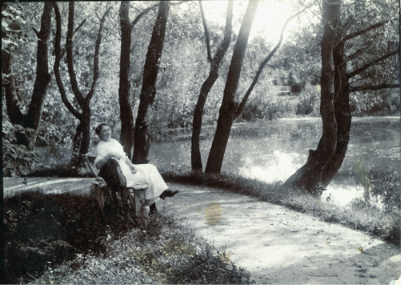
Janina Wierusz-Kowalska (née Swinarska), Alfred’s daughter, by the pond in the park. Photo source: Tadeusz Nasierowski
Barbara Nasierowska (née Swinarska), Alfred’s granddaughter, recalled Mikorzyn as a vast estate situated by a lake, amidst forests, marshes and wetlands, rich in game and birdlife.⁴ It was this picturesque setting that was to particularly captivate the painter.
Although he worked permanently in Munich, Mikorzyn became his family’s Polish home and a place where the artist regularly stayed whilst in the country.
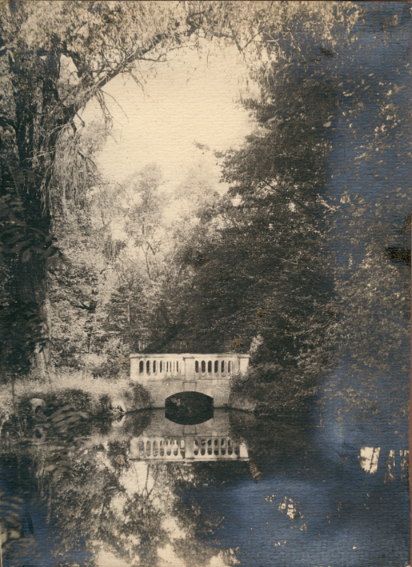
A footbridge over the pond in the park. Photo source: Tadeusz Nasierowski
The layout of the estate can be reconstructed thanks to family memoirs and later site visits. From the Gosławice side, there were farmlands and a forest stretching all the way to the lake.
Along the road leading to the fenced-off part of the palace grounds stood the staff quarters. Farm buildings stood in the vicinity of the residence, and further on lay the area known as Zdroje. On the opposite side of the palace lay a vegetable garden, an orchard and fields known as Pyłek.⁴
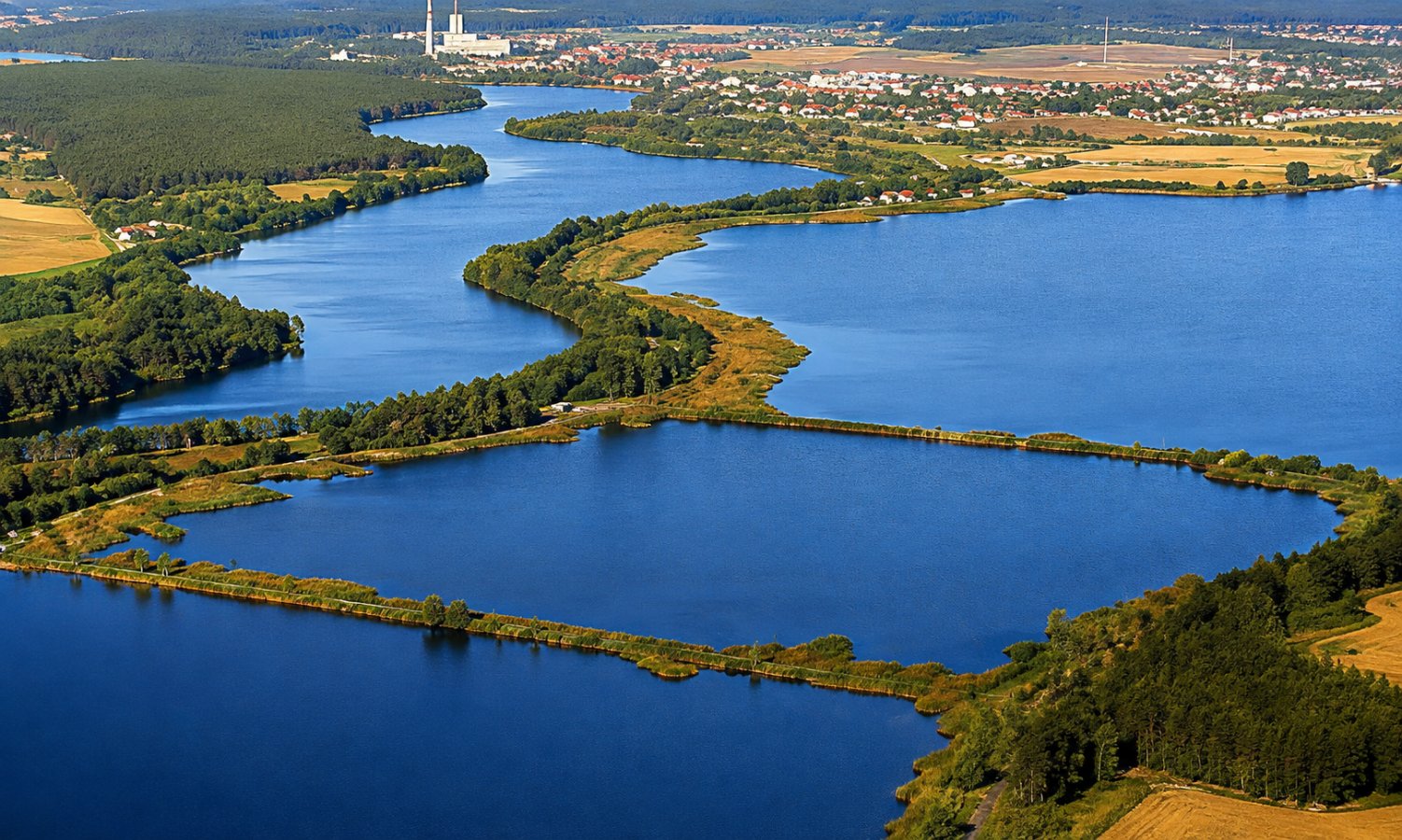
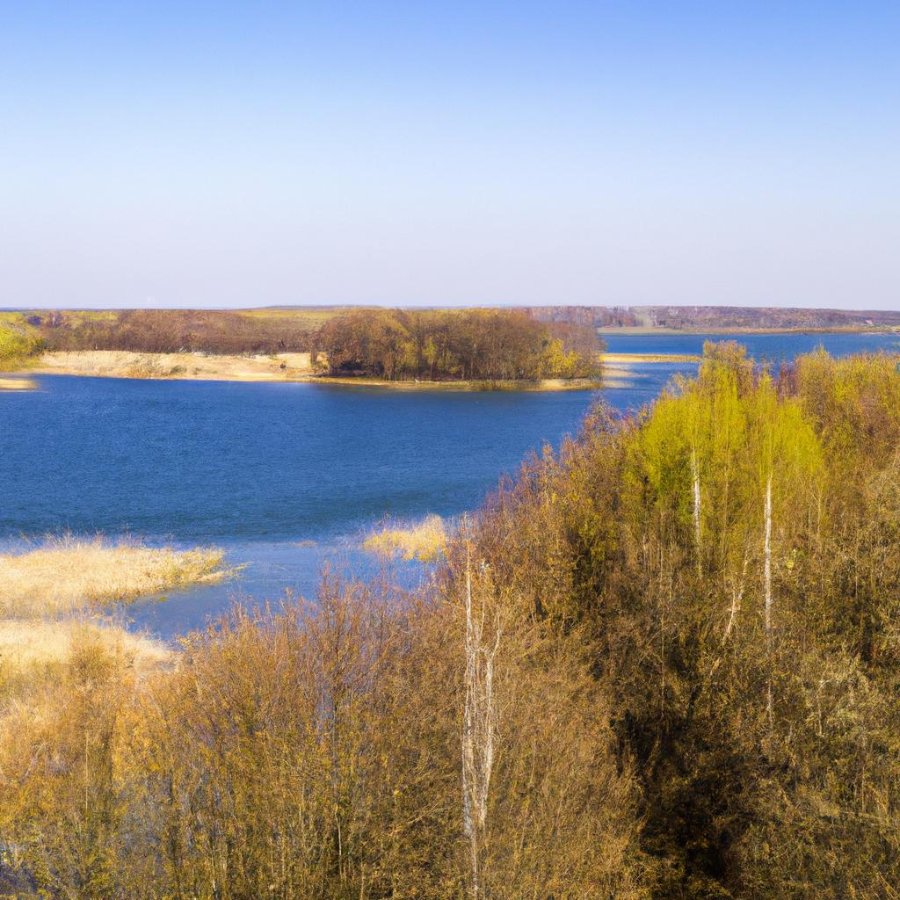
The palace surroundings
The estate was managed by Alfred’s youngest brother, Konrad. Among other things, he developed a breeding programme for Anglo-Arabian horses. Special enclosures and runs for wolves were also set up in Mikorzyn; the artist used them as models for his work. According to Barbara Nasierowska, there were six of them, and two were said to have been a gift from Emperor Wilhelm.⁴
Mikorzyn also played an important role in the upbringing of Alfred’s children. Their parents ensured that, despite living between Munich and Poland, they retained their knowledge of the Polish language, maintained contact with their family and kept a bond with their homeland. Czesław Wierusz-Kowalski formed a particularly strong bond with this place; it was here that he observed the landscape, the horses and the daily life of the villagers. These motifs later recurred in his own paintings.⁴
Alfred himself, even during his long stays in Munich, took an interest in the running of the farm. Preserved correspondence shows that he enquired about practical details, including the procurement of building materials and the condition of the buildings.³ Meanwhile, his wife Jadwiga and their children lived permanently in Mikorzyn. As a result, the estate was not merely a summer residence for the renowned artist, but the actual centre of the Wierusz-Kowalski family’s life in Poland. It combined economic, private and artistic dimensions, becoming a place to which Alfred returned from Munich and where he sought respite from his intense professional work.
The surroundings of the lake and forests also lent themselves to the observation of nature, which remained one of the most important sources of his imagination throughout his life.
In 1909, Alfred Wierusz-Kowalski began work on the monumental painting *The Wolf Attack*, measuring approximately 9 × 11 metres. Barbara Nasierowska linked the origins of the work to a family tale of a dramatic encounter with wolves whilst travelling by sledge in the Suwałki region in the winter of 1857.⁴ This subject was one of the most important themes in the artist’s work, and his stay in Mikorzyn, where live wolves were kept, gave him the opportunity to observe the animals at close quarters.
The fate of the enormous canvas turned out to be tragic. According to family recollections, following the artist’s death, the painting was transported to Poland along with some of the furnishings from his Munich flat and studio. In 1916, the convoy stopped at Strzałków, on what was then the border between the partitions, where the railway carriage was set alight and the work was burnt.⁴ The destruction of the painting means that one of Alfred’s most ambitious projects is known today mainly through photographs and family accounts.
The artist’s son, Czesław Wierusz-Kowalski, recalled years later that his father’s youthful experiences and his contact with the Polish landscape had a profound influence on his character and imagination. Mikorzyn became a place where this connection with his homeland could be constantly renewed. Family visits, observations of nature and life on the estate formed the backdrop to the later years of Alfred’s creative work.
Following the death of Alfred Wierusz-Kowalski in 1915, Mikorzyn was inherited by his son Jerzy. According to Barbara Nasierowska’s memoirs, Jerzy’s management of the estate did not yield the expected results, and unsuccessful investments led to the estate falling into debt.⁴ The family council then decided that the estate would be taken over by Alfred’s daughter, Janina Wierusz-Kowalska, together with her husband Tadeusz Swinarski, who was employed at the nearby sugar factory in Gosławice. Jerzy was to be repaid.
In 1926, the estate still covered some 328 hectares and remained one of the larger landed estates in the area.⁵ Janina and Tadeusz Swinarski had three children: Maciej, Jadwiga and Barbara. The youngest of them, Barbara, later married Andrzej Nasierowski and left behind valuable family memoirs, thanks to which it is possible to reconstruct both daily life in Mikorzyn and its subsequent history.⁴
The Second World War brought an end to the landed era of Mikorzyn’s history. In 1939, the Swinarski family was displaced by the Germans, and the estate came under German administration. After the war ended, the family attempted to return. Barbara Nasierowska recalled that in February 1945 she returned to Mikorzyn with her mother and sister, but after a few months, as a result of the agrarian reform, they were forced to leave their family home once again.⁴
The estate was nationalised and divided up. The forests and the lake were nationalised, and some of the farm buildings were demolished, including the nineteenth-century granary.⁴ This marked a fundamental turning point in the history of the place: the continuity of landownership spanning many generations was broken, and the manor house and its surroundings began to serve new purposes, no longer linked to the former farm.
At the same time, opencast lignite mining was developing in the Konin region, which completely transformed the local landscape. According to the memoirs of Barbara Nasierowska, the palace was handed over to a company involved in opencast mining. The dilapidated building and the ruined park were subsequently restored, and the former residence was converted into a holiday centre for employees.⁴ In 1998, the entire complex changed hands and began operating within a new economic context.
Despite the post-war transformations, the basic structure of the residence has survived. The palace is a late-Classical building constructed on an elongated rectangular plan, with sections of varying heights and a distinctive observation tower integrated into the façade.⁵ Only part of the original layout of the former park has survived, whilst a significant area has, over time, been reallocated for other developments. The building’s current use differs entirely from its original function; however, the palace itself remains the most important physical remnant of the former estate.
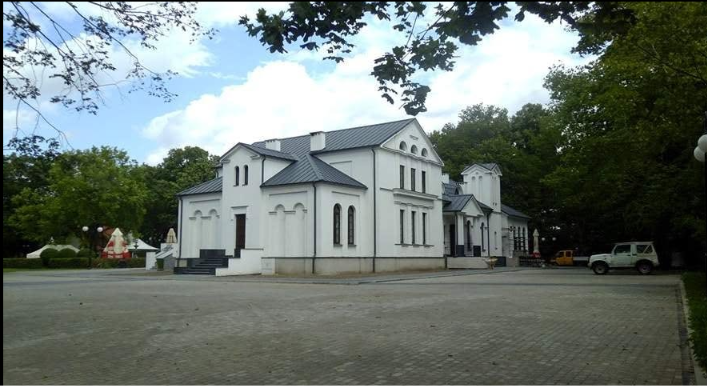
The Palace in Mikorzyn – current state Photo source: http://www.polskiezabytki.pl/m/obiekt/6319/Mikorzyn/